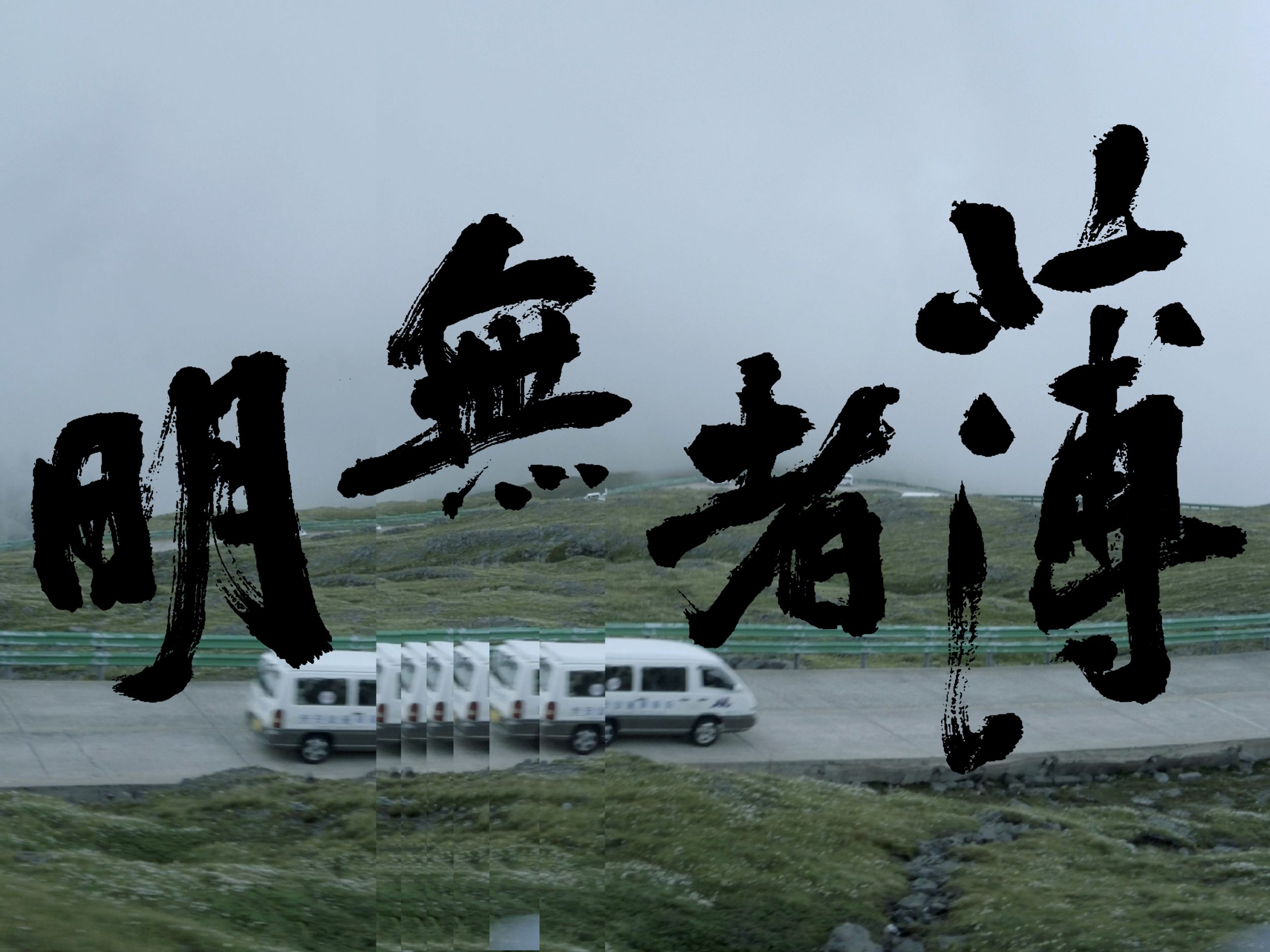
Into the Thin Air (2025-2026)
Video installation
2025-2026
HD | 4:3 | colour | 5.1 | Chinese (Putonghua), Manchu, Cantonese, Japanese, English dialogue | Simplified, traditional Chinese and English subtitles
The terra is volatile.
Once upon a time, a she-dragon dwelled in a mountain veiled with beauty—dense woods, a still pond, a cascading waterfall, and a temple of her own.
Three Englishmen came. A newlywed couple. A Japanese troop. A Buddhist war missionary. And others, too.
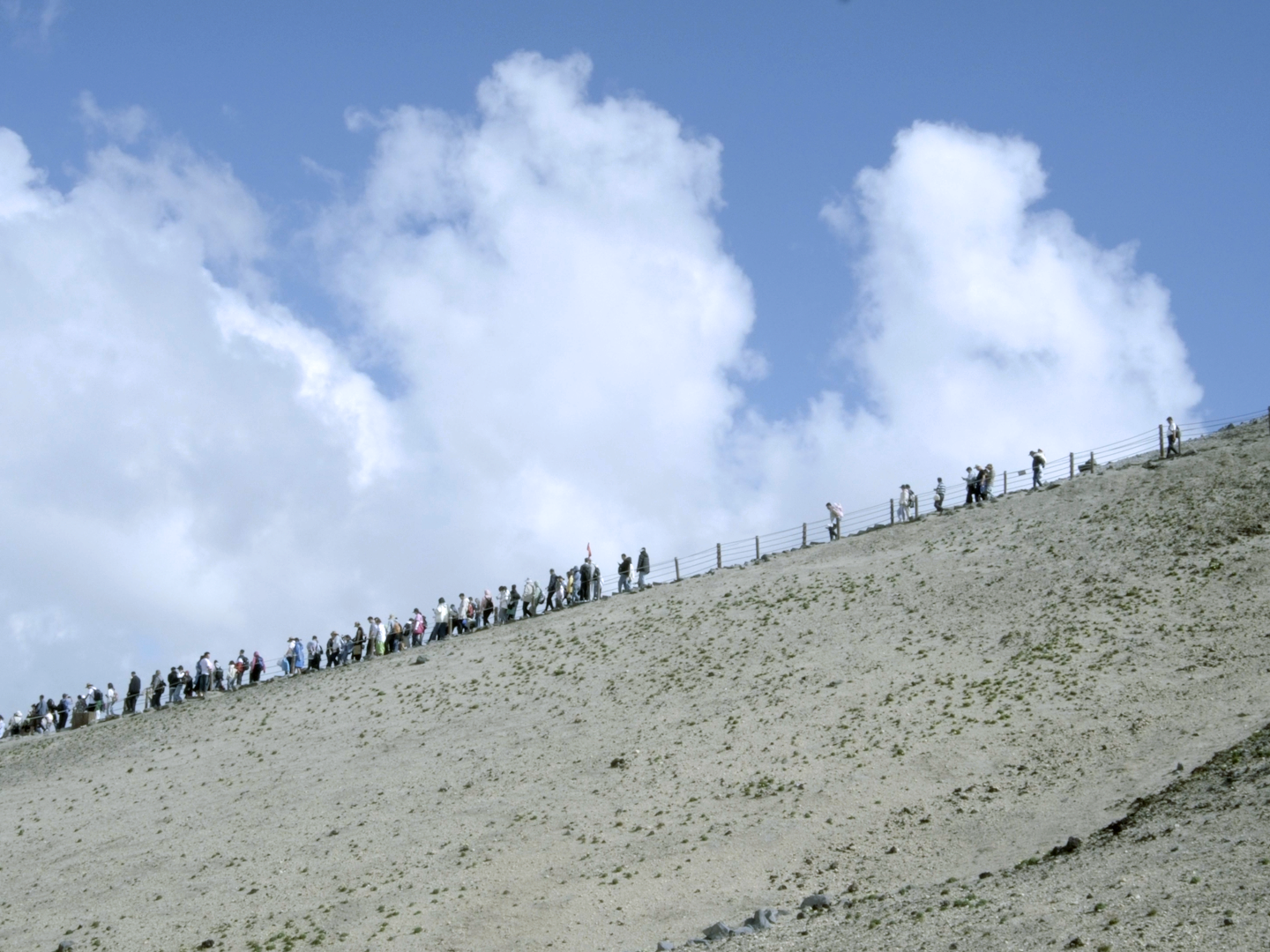
All drawn to explore the holy mountain.
But the air is thin up there.
No one enters without an experienced guide.
Without one, the fog will daze you.
The paths fork endlessly.
Time folds in on itself.
She/he/they/it vanishes into the thin air, and the reasons elude us.
We think she/he/they/it once existed.
Perhaps they will again.
Or perhaps they were never here at all.
A dragon lives forever, but not so girls and boys. [1]
Since then, songs and myths have slipped
through the narrow seams of silence and precarity.
This is a story about fugitivity
and more-than-human entanglement.
in a space of disappearance.
—
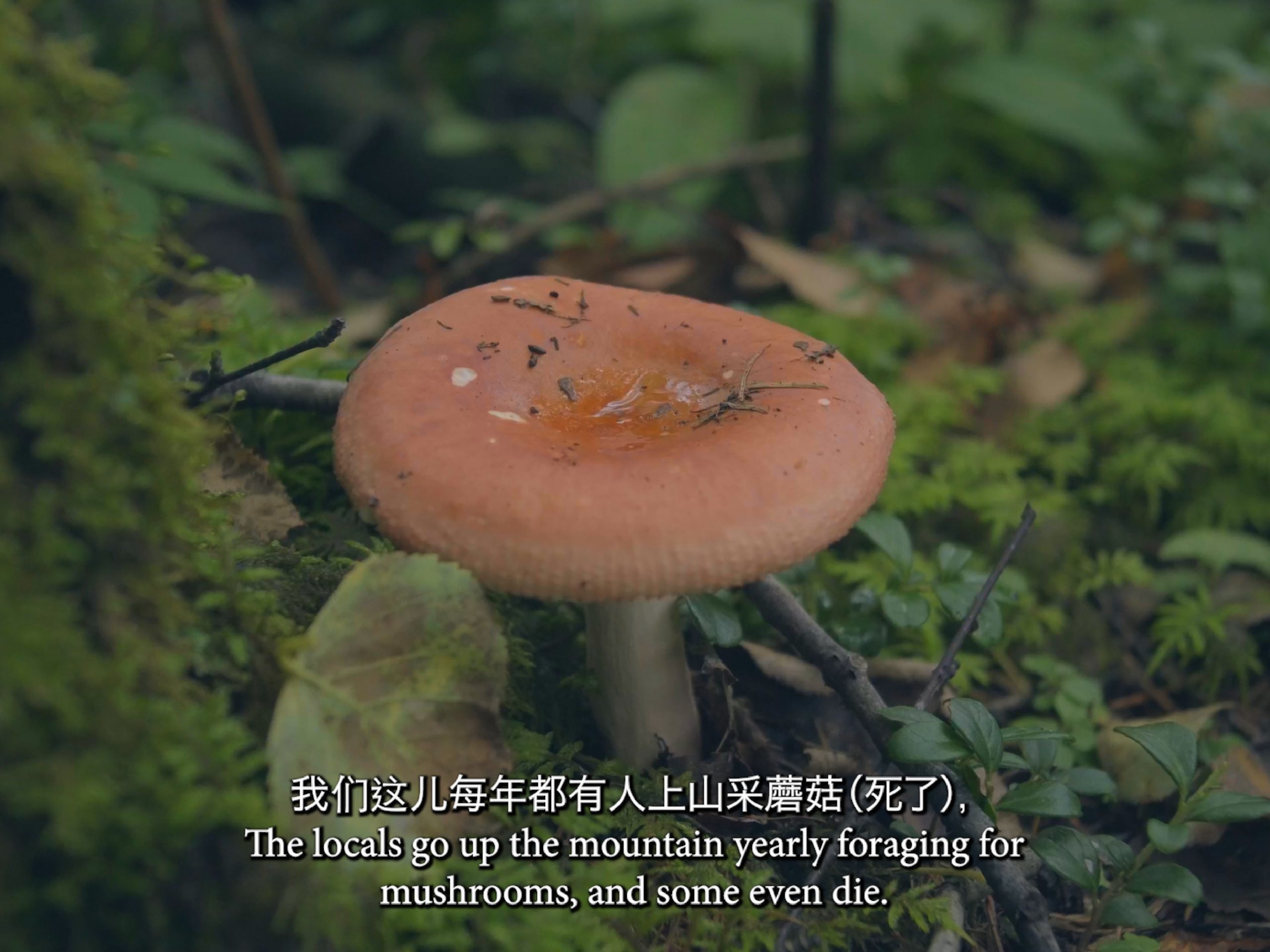
Into the Thin Air explores the entanglement of impermanence and agency across the sacred mountain and borderlands of Northeast China. It is a five-year artistic research project, comprising a six-channel video installation, performative reading and publication.
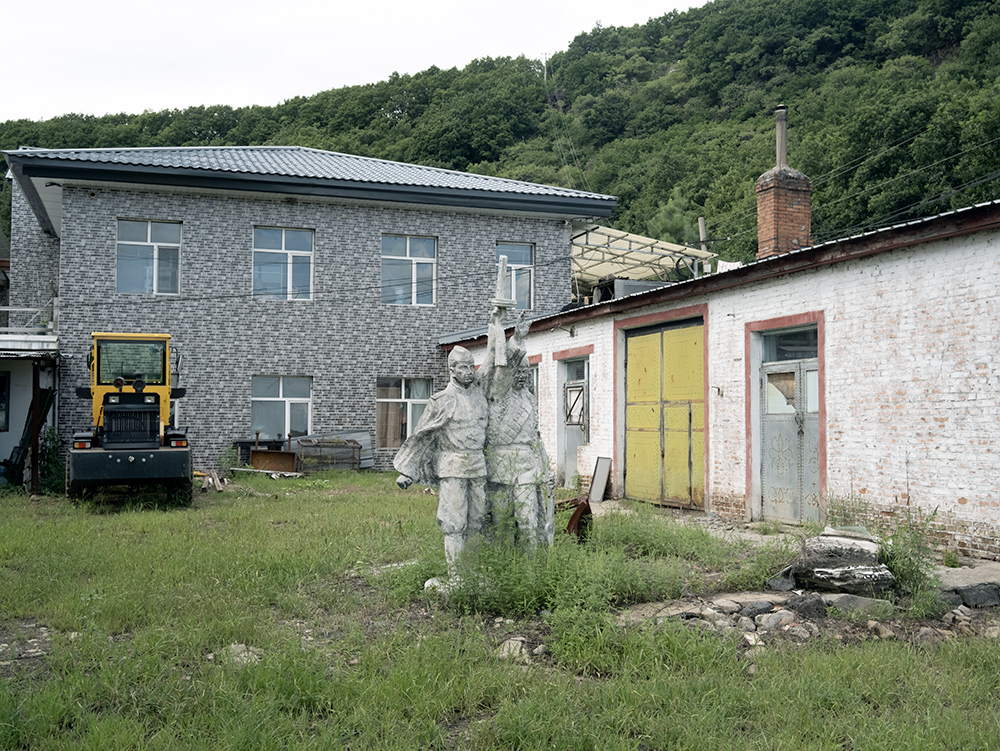
The project approaches the Mountain as an agentic, cosmological entity rather than an extractive subject. To renew the contemporary decolonial discourse, the work reveals a terrain that manoeuvres beyond colonial capture and central archival containment. It engages with the region’s complex stratigraphy—layering European and Japanese imperialism, Soviet aggression, and post-socialist modernisation—not as linear history, but as a sentient, resistant force.
Integrating extensive fieldwork, archival traces, and critical fabulation, the multi-channel installation attempts to unpack the region’s collapsed historio-ethnographic complexities in a simultaneous, anachronic, and often conflicting manner. It mobilises the concepts of ‘thinness’ and ‘veiled perception’ (avidyā), framing disappearance as a stratigraphic resistance and transparency as a challenge to total legibility. Here, the sacred mountain acts as a more-than-human agent of self-healing, defying the state’s optic through a fugitive, affective presence. Beyond the installation, this research is activated through visceral embodiment, translating the unspeakable affect of border-lives into a lived ritual. The project reflects my own colonial and post-colonial lived experience, to delink marginality from its traditional association with pure subjugation.
[1] Peter, Paul and Mary, “Puff, the Magic Dragon” track 5 on Moving, Warner Bros, 1963.
The project is supported by the National Asian Cultural Center (Korea), Asian Art Biennial 2026, and the Consortium for the Humanities and the Arts South-east England (CHASE).